

Environmental and social assessment practitioners routinely collect and manage large volumes of data as part of project planning, stakeholder engagement, and impact analysis. While this data is essential for informed decision-making, it also carries significant responsibilities regarding privacy, security, and lawful use.
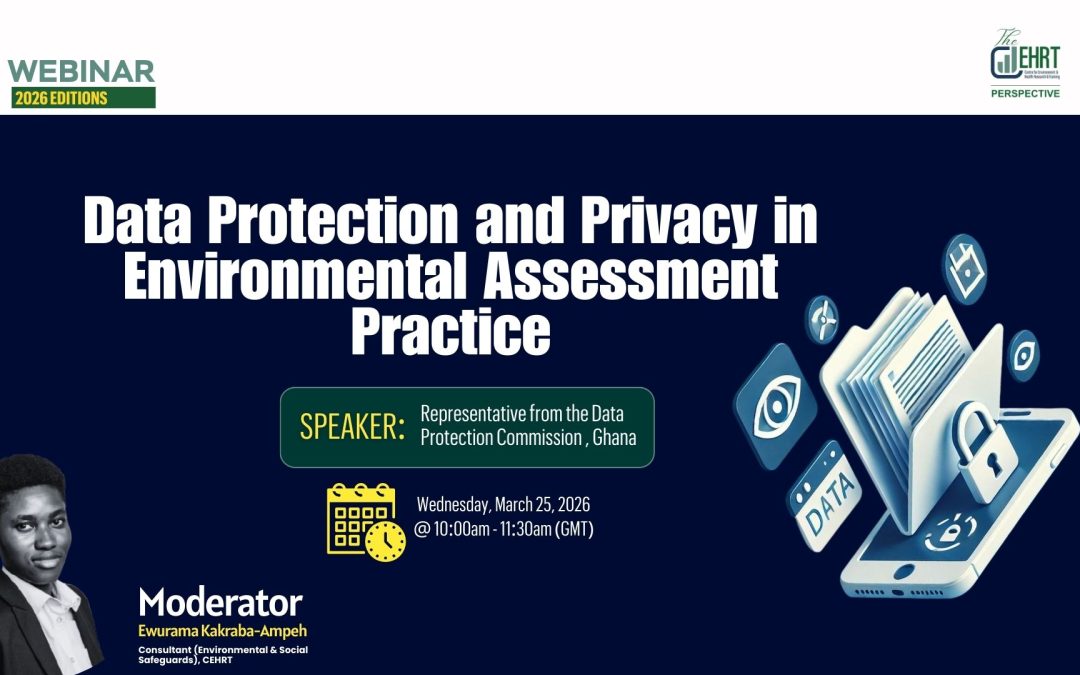
To address this growing concern, CEHRT Ghana will host the first 2026 edition of The CEHRT Perspective Webinar Series, focusing on Data Protection and Privacy in Environmental Assessment Practice. The session aims to equip professionals with the knowledge and practical guidance needed to responsibly manage stakeholder data throughout the environmental assessment process.
Purpose of the Webinar
The webinar seeks to build awareness and deepen practical understanding of data protection and privacy obligations within environmental and social assessment practice.
Participants will gain insights into how to handle stakeholder data lawfully, ethically, and responsibly during key stages of project implementation, including planning, impact assessment, reporting, and monitoring.
By strengthening practitioners’ understanding of data protection principles, the session will contribute to more responsible data handling practices across environmental consulting, development projects, and regulatory processes.
Environmental Assessment Practice and Data Use
Environmental assessment professionals frequently engage with communities and individuals when assessing the potential impacts of development projects. These engagements often include:
- Stakeholder consultations and public meetings
- Household and socio-economic surveys
- Interviews with project-affected persons
- Focus group discussions
- Field observations and documentation
These activities generate significant amounts of personal and community-level data.
The information collected may include names, phone numbers, residential addresses, photographs, audio recordings, livelihood information, land ownership details, household composition, income sources, and other socio-economic characteristics. In certain contexts—such as resettlement planning, livelihood restoration programmes, or vulnerable group assessments—this may also involve sensitive personal data.
Data gathered during fieldwork is typically documented in environmental and social assessment reports and shared with project clients, regulators, and financiers. Some reports are publicly disclosed under national regulatory requirements, including the Environmental Protection Act, 2025 (Act 1124) and the Environmental Protection (Environmental Assessment) Regulations, 2025 (LI 2504), or in accordance with lender disclosure policies.
Other datasets may be retained for monitoring, compliance reporting, project audits, or subsequent project phases. As a result, information is often stored in both physical and digital formats and shared across multiple institutions.
Key Data Protection Risk Areas
Despite the routine use of data in environmental assessment work, practitioners often face uncertainty about the legal and ethical requirements governing data protection.
Some of the most common challenges include:
- Obtaining informed consent during community engagements
- Determining what personal information can be included in publicly disclosed reports
- Managing data sharing with project clients, regulators, and financiers
- Establishing appropriate data retention periods
- Understanding registration requirements and legal obligations
- Determining responsibility for data breaches
- Clarifying the roles of consultants versus project proponents in data management
Addressing these issues is essential to ensure compliance with national regulations and international standards while maintaining trust with communities and stakeholders.
Expert Presentation by the Data Protection Commission
To provide authoritative guidance on these issues, the webinar will feature a presentation by a resource person from the Data Protection Commission.
The 30-minute expert presentation will focus on how Ghana’s data protection laws apply specifically to environmental assessment practice. Key topics to be covered include:
- Who qualifies as a data controller or data processor
- The lawful basis for collecting stakeholder data
- Consent requirements during public consultations and field engagements
- Handling personal data in resettlement action plans (RAPs), surveys, and interviews
- Data retention and storage obligations
- Protocols for data sharing with clients, regulators, and financiers
- The rights of data subjects
- Sanctions and compliance risks related to improper data handling
This session will provide practical clarity to environmental practitioners navigating the intersection of data protection law and impact assessment practice.
Date: Wednesday, March 25, 2026
Time: 10:00am – 11:30am
Cost: Free
Register here: https://us06web.zoom.us/webinar/register/3517736764051/WN_g-S5Tzy9S_WPJ2yqOAu-yQ
About The CEHRT Perspective
The CEHRT Perspective is a key Corporate Social Responsibility (CSR) initiative of CEHRT Ghana. The initiative reflects the organisation’s commitment to advancing sustainability and strengthening impact assessment practices through knowledge sharing and professional engagement.
The CEHRT Perspective serves as a platform for dialogue and learning, bringing together professionals, regulators, researchers, and development practitioners through expert-led webinars and professional publications. As part of this initiative, CEHRT organises quarterly webinars that explore topical issues related to environmental management, sustainability, and professional practice.
Beyond consultancy services, the initiative supports CEHRT’s broader vision of becoming Africa’s leading firm in training and consulting for environmental, social, public health, and sustainability excellence. By fostering professional learning and encouraging open discussion of emerging issues, the platform contributes to building stronger environmental governance and better decision-making across the sector.
Launched in 2025, The CEHRT Perspective has already hosted several webinars addressing critical issues in environmental practice, including:
- Understanding Ghana’s New Environmental Legal Framework: What Has Changed and What It Means
- Misaligned Timelines and Missed Opportunities: Situating Environmental Assessment Within the Project Lifecycle
- Beyond Permits: Using Impact Assessment as a Catalyst for Sustainable Development
- Environmental and Social Assessment (ESA) for Brownfield Projects
Through these engagements, CEHRT continues to promote professional excellence, strengthen sector knowledge, and support responsible environmental management in Ghana and beyond.